
Russian River Weekly Update 4/6/26
<Click to view content on website>
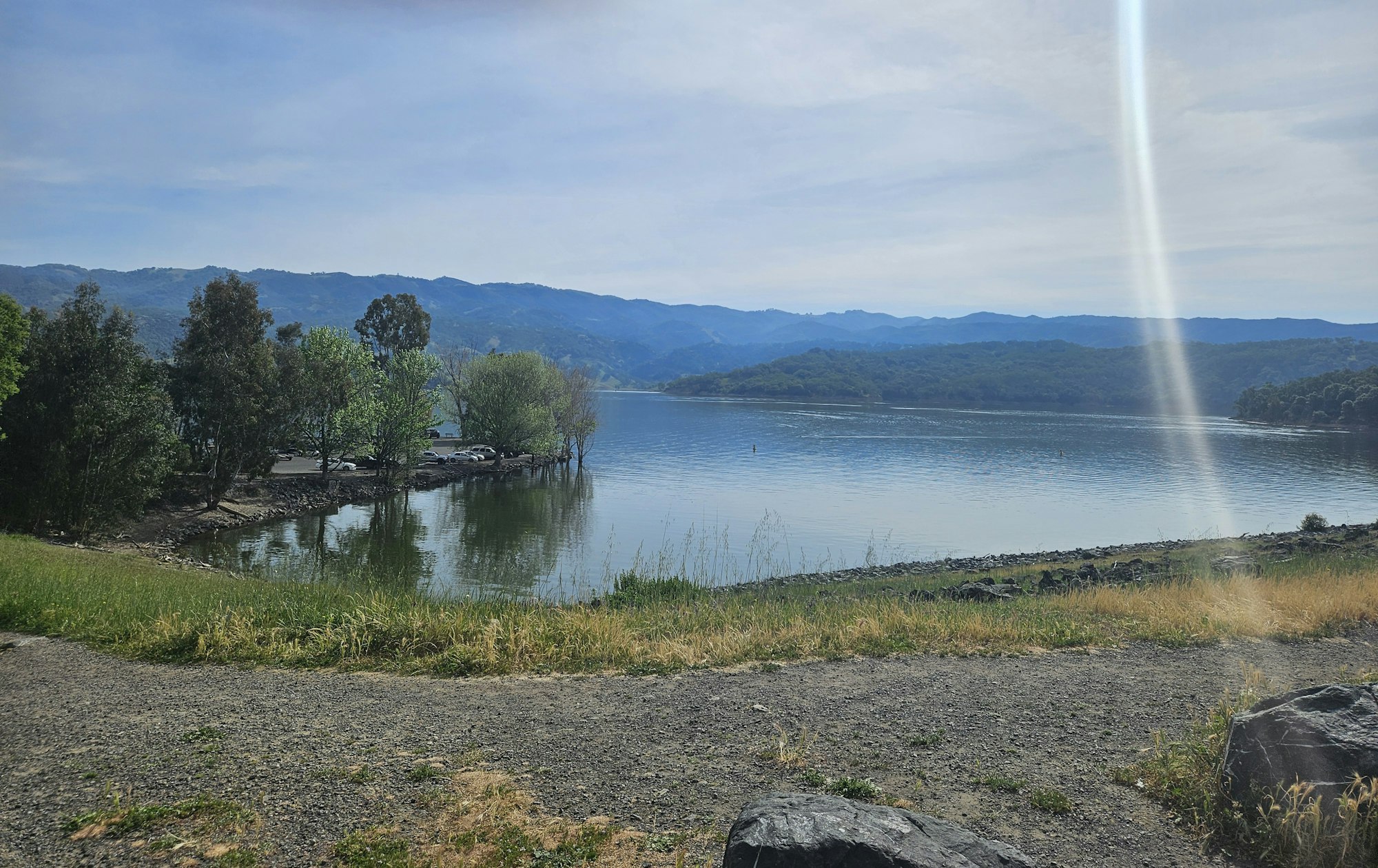
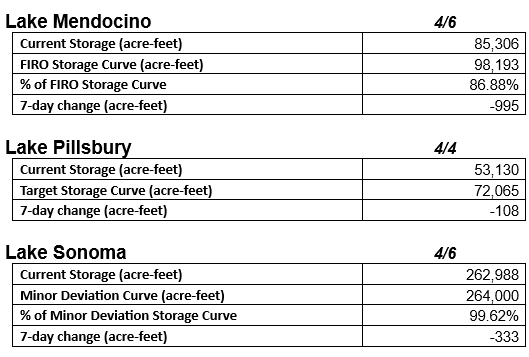
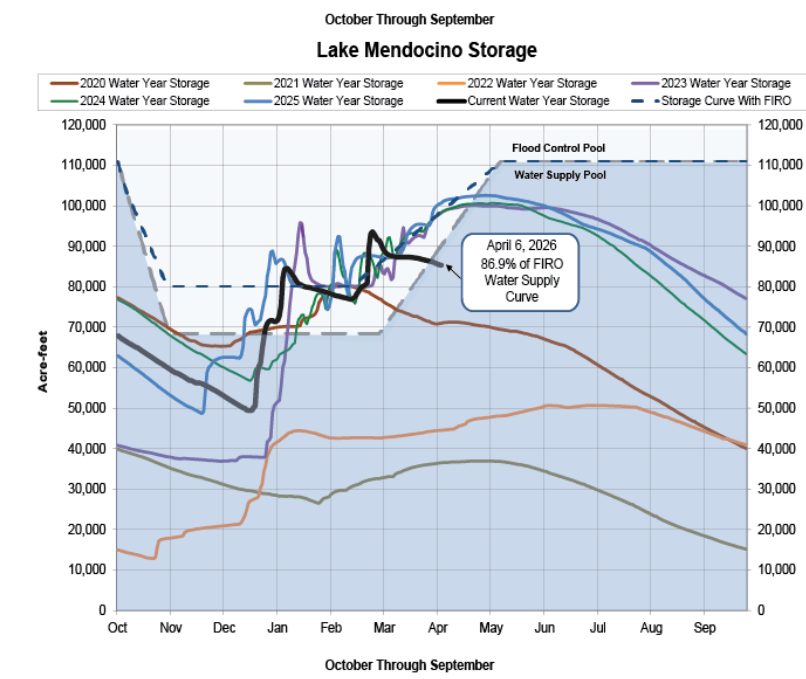
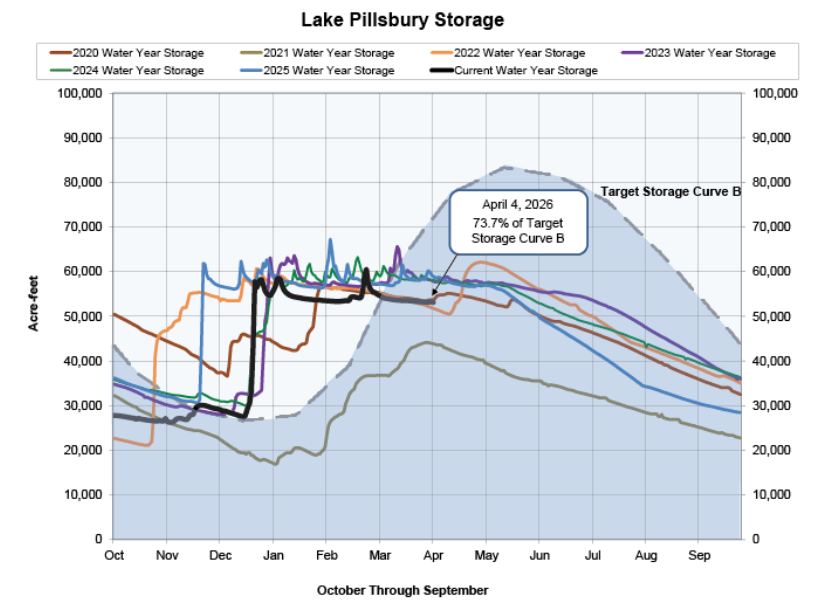
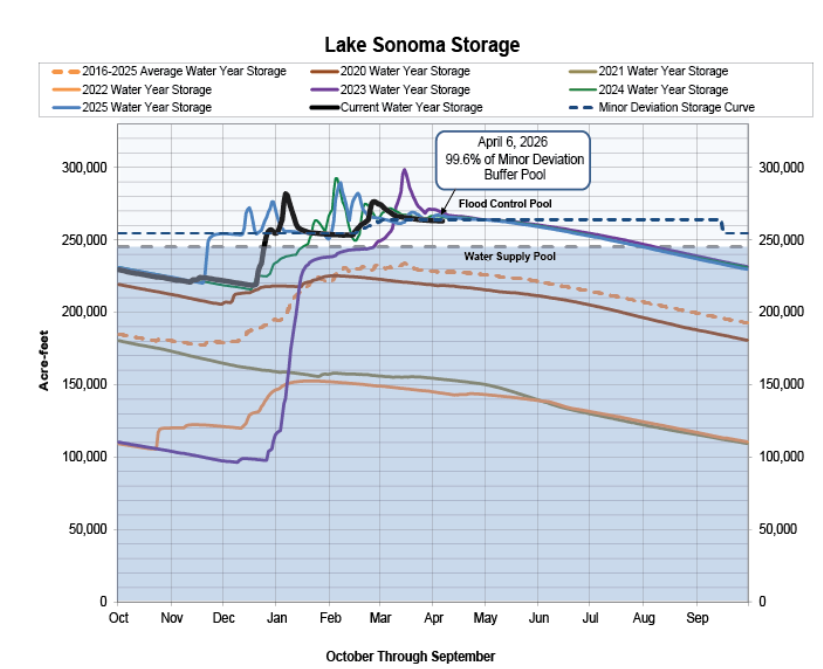
Reservoir Storage & Operations:
Water supply information provided by Sonoma Water (find more water storage info here).
Save the Date! Russian River Water Year 2026 Update – Rainfall and Supply Levels, Wednesday, April 15, 2026, 12 p.m. – 1 p.m.
Register for the Zoom webinar at https://bit.ly/water-year
"Join this insightful webinar that will review rainfall, reservoir conditions, and ongoing water supply forecasts for the Russian River watershed. Hear what local, state, and federal experts have to say about the water year we’ve had so far and what we might expect as summer approaches. The webinar will be conducted in English, with Spanish captions available on YouTube after the event."
Speakers: Rebecca Hermosillo, Chair, Sonoma Water Board of Directors. Nick Malasavage, Chief, Operations and Readiness Division, U.S. Army Corps of Engineers San Francisco District (invited). Donald Seymour, Deputy Chief Engineer, Sonoma Water. Jeanine Jones, Interstate Resources Manager, California Department of Water Resources
NOAA Drought Seminar Series - Inaugural Seminar Monday, April 13, 2026 at 1–2 p.m. ET
Link to Registration “Join Us April 13 for the Inaugural Seminar on Pathways of Ongoing Aridification in Southwest North America. We are pleased to announce the new NOAA Drought Seminar Series, a collaborative effort between NOAA Research's Physical Sciences Laboratory, the National Integrated Drought Information System (NIDIS), and the National Weather Service's Climate Prediction Center.
“The series aims to be a valuable platform for the national drought research, operational, and user communities to share the most recent tools, research outcomes, and ongoing initiatives, and to enhance NOAA's capabilities in monitoring, predicting, and understanding drought.
“Held virtually for one hour on the first or second Monday of each month, every seminar will include a speaker presentation with Q&A, and general updates on activities in the drought community. For additional information, please visit the NOAA Drought Seminar Series page or email psl.drought.seminars@noaa.gov.”
North Coast Resource Partnership Quarterly Meeting – April 17, 2026
"Join us April 17, 2026, 9:00am - 3:00pm in the Eureka area for presentations from partners in the region, updates on NCRP projects and initiatives, and resource fair networking. Registration link"
Meeting Topics:
- Tribal Welcome | County Welcome | Co-Chair Welcome
- Partner Presentations
- NCRP Capacity Grant Awards
- NCRP Project Updates
- Funding Updates
NCRP Request for Proposals: Technical Assistance for Grant Development to Support On-The-Ground Implementation Projects, Due May 1, 2026
The North Coast Resource Partnership is pleased to offer a Request for Proposals for Technical Assistance to North Coast partners, including Tribes, counties, NGOs, RCDs, watershed groups, and others to support grant applications for on-the-ground projects that improve forest health and increase wildfire resilience in economically disadvantaged communities. Visit the link for more information.
State Water Board Recently launched: A new way to tell our stories
“The State Water Board is excited to announce the launch of a weekly digital publication, called Ebb and Flow, that will explore water-related topics and provide insight into the work we do across our nine regions, divisions and offices. We will publish compelling stories each Wednesday in a conversational style – some short, some longer – that explain the science, policies and water quality issues impacting communities throughout the state.
"Our first article, “How California rose to the challenge of protecting water quality,” introduces the Dickey Act - which established the Water Boards more than 75 years ago - and offers examples of how regulation has brought about dramatic improvements in the San Diego Bay, San Francisco Bay and Klamath River watershed."
To read the weekly articles, you can subscribe here.
California Natural Resources Agency Hosts Discussion on California's New Water Plan
"California faces more extreme water swings as the climate warms. Droughts are deeper. Floods are more intense. Rising temperatures, including recent spring heat, reduce available water supplies and strain ecosystems. To adapt, the state’s Department of Water Resources has kicked off the development of an updated water plan. This is the first plan to set state law required targets to expand water supplies over the next two decades.
"Join us as we unpack how this water plan will help us adapt to a changing future and manage water for people and nature. We’ll also check in on current water supply conditions among record breaking spring temperatures and what it means to our water supply for the rest of the year."
Sustainable Conservation’s Voices from the Field Webinar Series
“Join Sustainable Conservation next Wednesday, April 8 as we kick off the Spring 2026 season of our Voices from the Field webinar series! We’ll start with a conversation with state leaders Karla Nemeth (California Dept. of Water Resources) and Virginia Jameson (California Dept. of Food & Agriculture) on why healthy watersheds are central to California’s climate future. We’ll explore how climate extremes are reshaping water management and how collaborative strategies like groundwater recharge, land repurposing, habitat restoration, and soil health practices can work together to build resilience.”
In the press:
- CA Water Plan eNews 4/1/26
- Maven's Notebook Weekly March 29-April 3, 2026
- Sustainable Groundwater Management News: March 2026
- CalTrout: You Can’t Manage What You Don’t Measure: Reservoirs and California’s Climate Blind Spot 3/31/26
- USGS (via Maven's Notebook): AI tool forecasts drought 90 days ahead nationwide 4/1/26
- Press Democrat: ‘It’s very scary’: Iran war affects North Bay farmers facing fuel, fertilizer price hikes 4/2/26
- Phys.org: Watering smarter, not more: A modern-day robotic divining rod 4/2/26