
Russian River Update 8/28/23

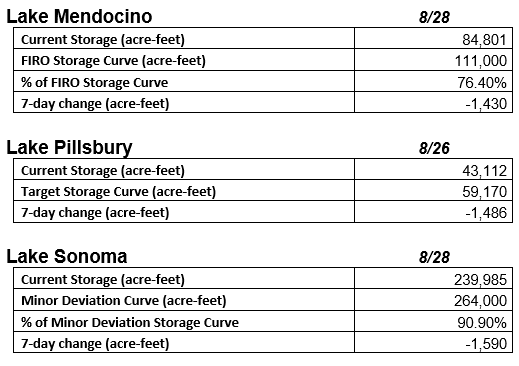
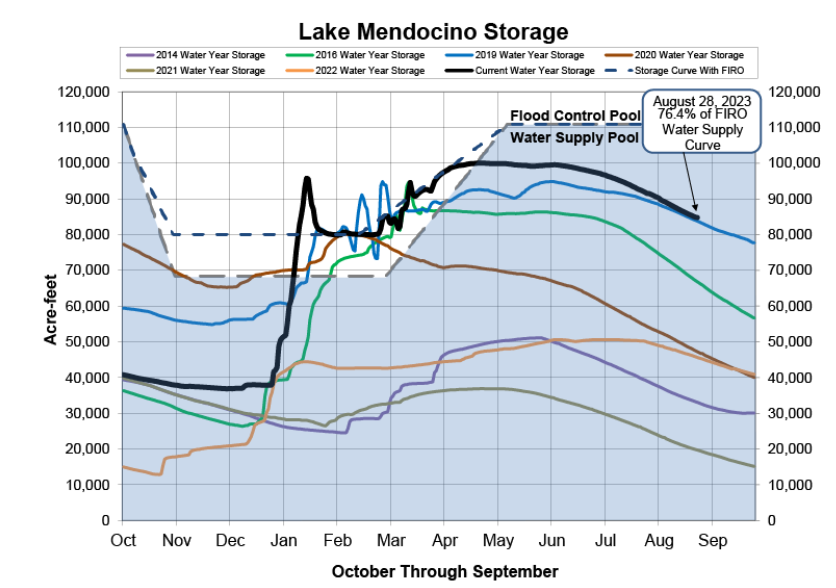
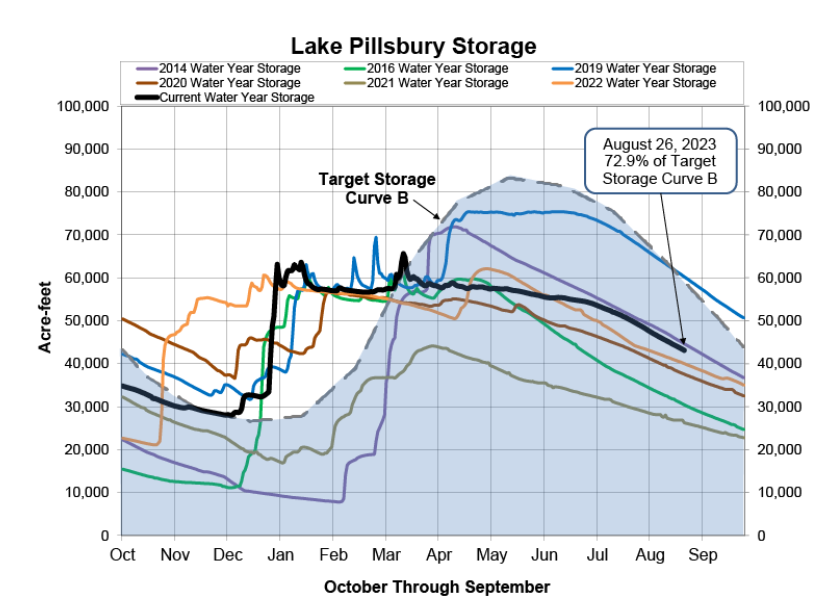
Reservoir Storage & Operations:
Water supply information provided by Sonoma Water (more info here).
Future of the Trans Basin Diversion (Eel to Russian River)
Marin Independent Journal: Marin water suppliers monitor Mendocino water diversion plan, 8/23/23

Russian River Water Forum Updates
A Planning Group meeting is scheduled for Thursday, September 7, 2023 at 10:00 AM, see website for more information. https://russianriverwaterforum.org/
CA Water Education Foundation Water Summit: October 25, 2023
Water Summit: Registration for the Foundation’s premier event is now open. The annual summit will take place Oct. 25 in downtown Sacramento. This year’s theme is Taking on the Improbable in Western Water.
CA Water Data Consortium

Podcast Spotlight
Chatter: Water, Security, and Conflict with Peter Gleick, 6/15/23

“Water, essential to the emergence and endurance of life on Earth, has both spurred technological advances and driven many types of conflict. For the first time in humanity's long history with water, we are starting to suffer the consequences of widespread unsustainable water use, and we soon will face a crucial collective choice about what future generations' interactions with water will look like. Hydroclimatologist Peter Gleick has studied the issues at the intersection of water, climate change, security, and conflict for decades; he recently wrote The Three Ages of Water to bring together much of his life's work on how water has shaped the course of human history and why acting now is so vital for fostering a sustainable hydrologic future. David Priess hosted him for a conversation covering his early interest in hydrology, the importance of interdisciplinary studies for water issues, early civilizations' relationship with water, ancient epic flood stories, early legal codes' attention to water conflict, the scientific revolution's water impacts, water poverty, the difference between so-called water wars and conflicts involving water, Hollywood's portrayals of water conflicts, NASA's GRACE satellites, the peak water debate, the path to a more sustainable future, and more.”
In the press:
- UDJ: Ky-en Campground reopens at Lake Mendocino, 8/25/23
- CA Water Education Foundation: 'If You Build It, They Will Come' Scientists Chart Transformation of Klamath River and Its Salmon Amid Nation's Largest Dame Removal Project, 8/2/23
- Courthouse News Service: Multiyear El Niño and La Niña events likely to increase, researchers say, 8/23/23
- Mercury News: California considers permanent ban on watering grass at businesses, even in non-drought years, 8/23/23
- Union of Concerned Scientists: We Reviewed More Than 150 Papers on Water Management. Here’s What We Learned., 8/23/23
- PPIC: Civic Education Is Essential to California’s Future, 8/28/23